Shopify App : Rich Returns
Automate Your Returns and Offer Exchanges for Profit Retention
About Rich Returns
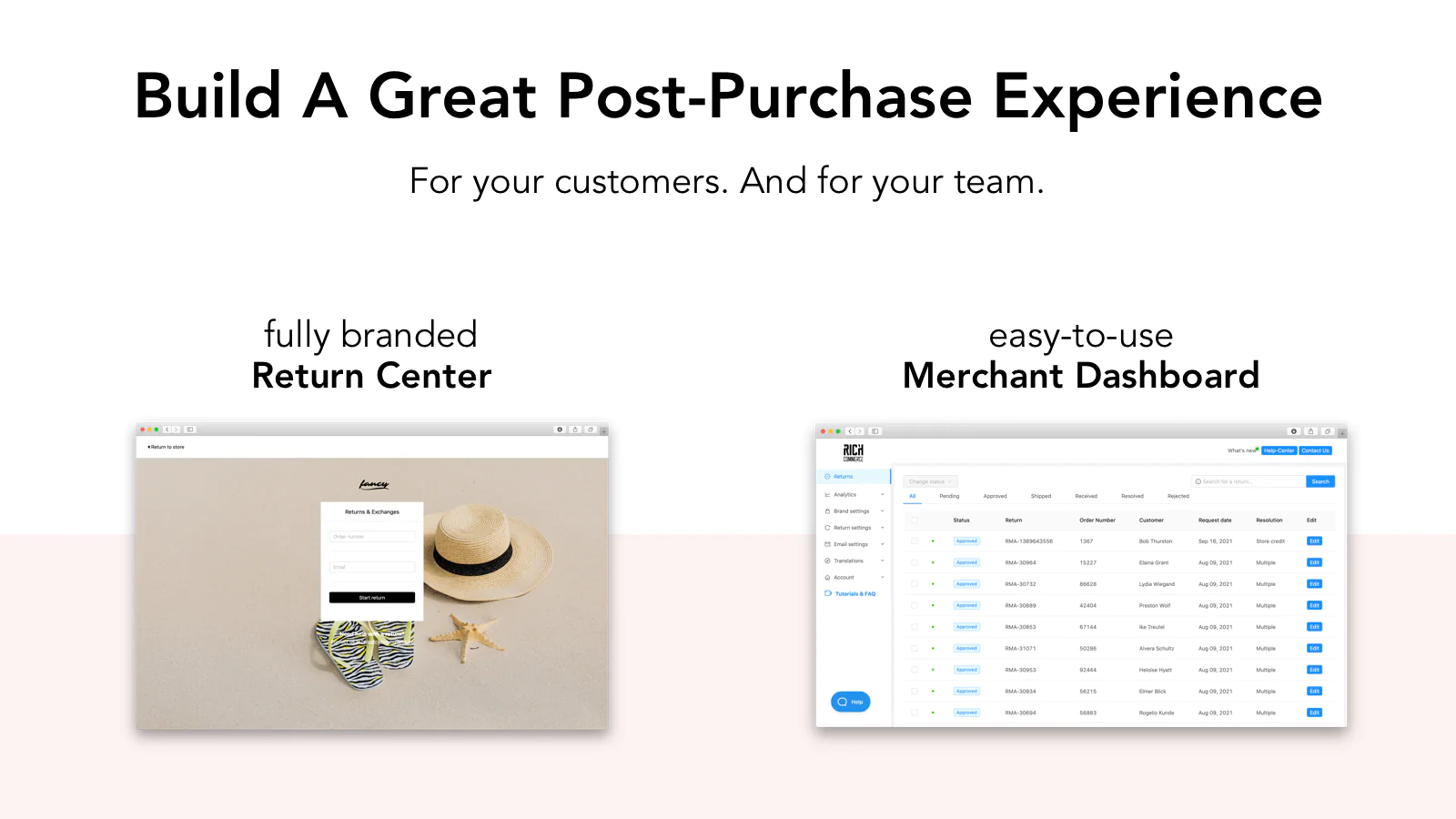
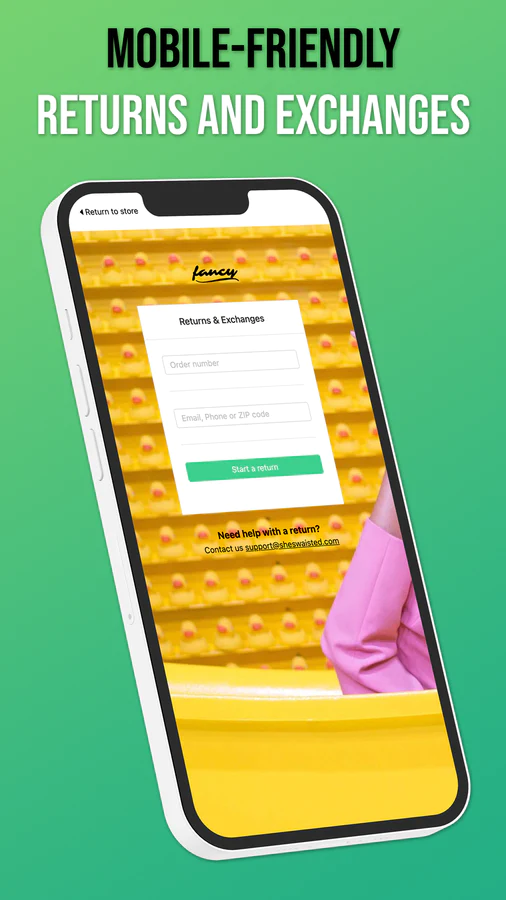
Returns on Auto-Pilot : Create a fully-branded return portal for your customers to quickly process returns and get automated return shipping labels.
Exchanges to Maximize Profit : Turn refunds into exchanges with our 1-Click exchanges option including ability to exchange for other products. Keep customers and profit!
Return Labels & QR-Codes : Use our Shipping Label Integrations to generate automated return shipping labels & QR-codes for a smooth, seamless return shipment process.
A powerful returns and exchanges solution for Shopify & Shopify Plus
Rich Returns is a fully-featured Shopify return app that helps small and large brands automatically process returns, exchanges, and refunds for their store through their custom-branded returns portal.
Merchants use our app to automate returns and exchanges, auto-generate return shipping labels, and keep customers informed throughout the entire process
This allows customers to process a return or exchange in just a few clicks, saving you valuable communication time.
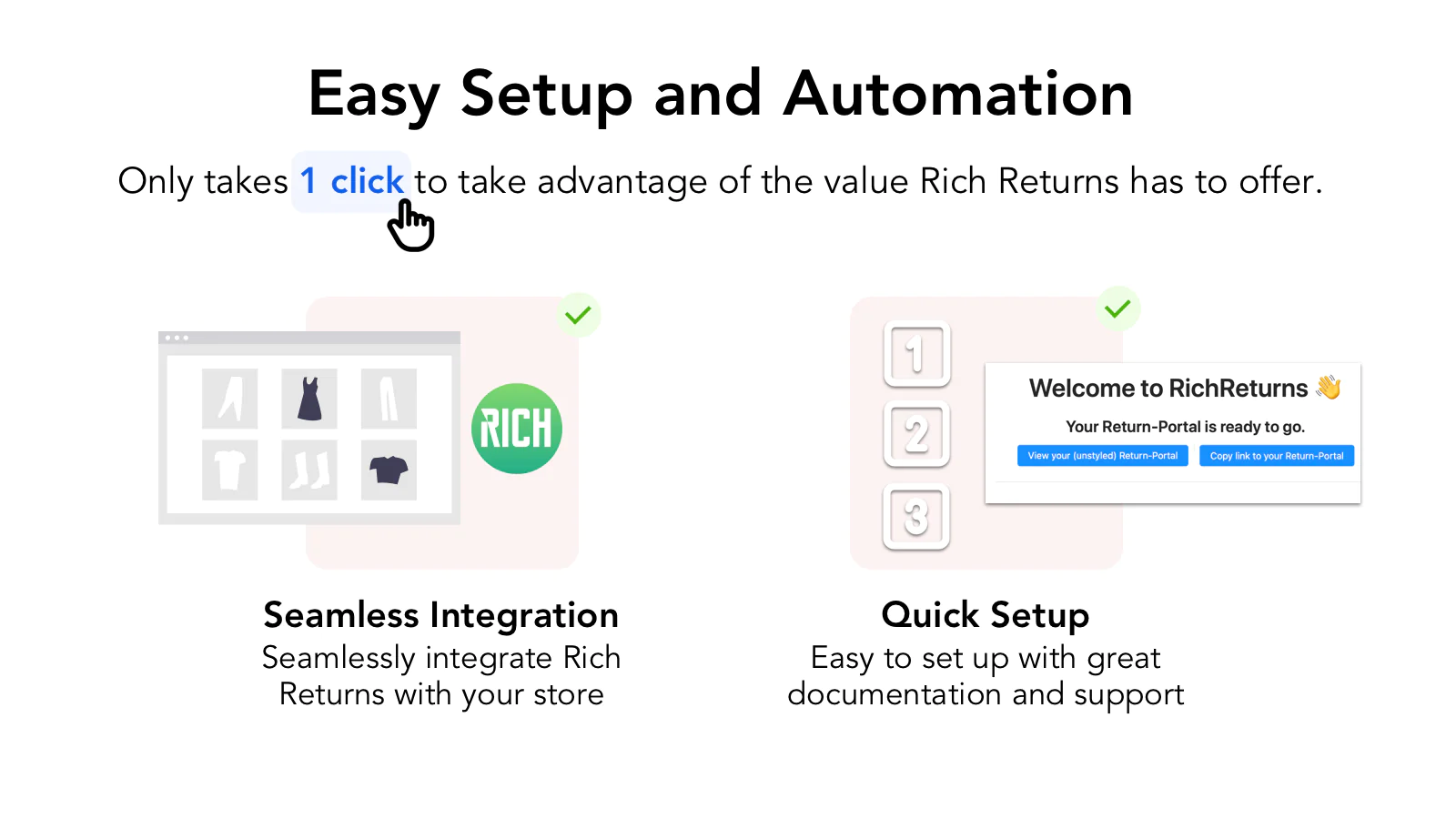
It’s easy to get started with lots of documentation, walk-through videos, easy integrations, and responsive customer support to answer all of your questions and help with setup.
Exchanges and Returns Processing
- Perfect tool for return management: Save time and money by tracking and managing all of your returns, exchanges, refunds, and RMA requests in one central dashboard
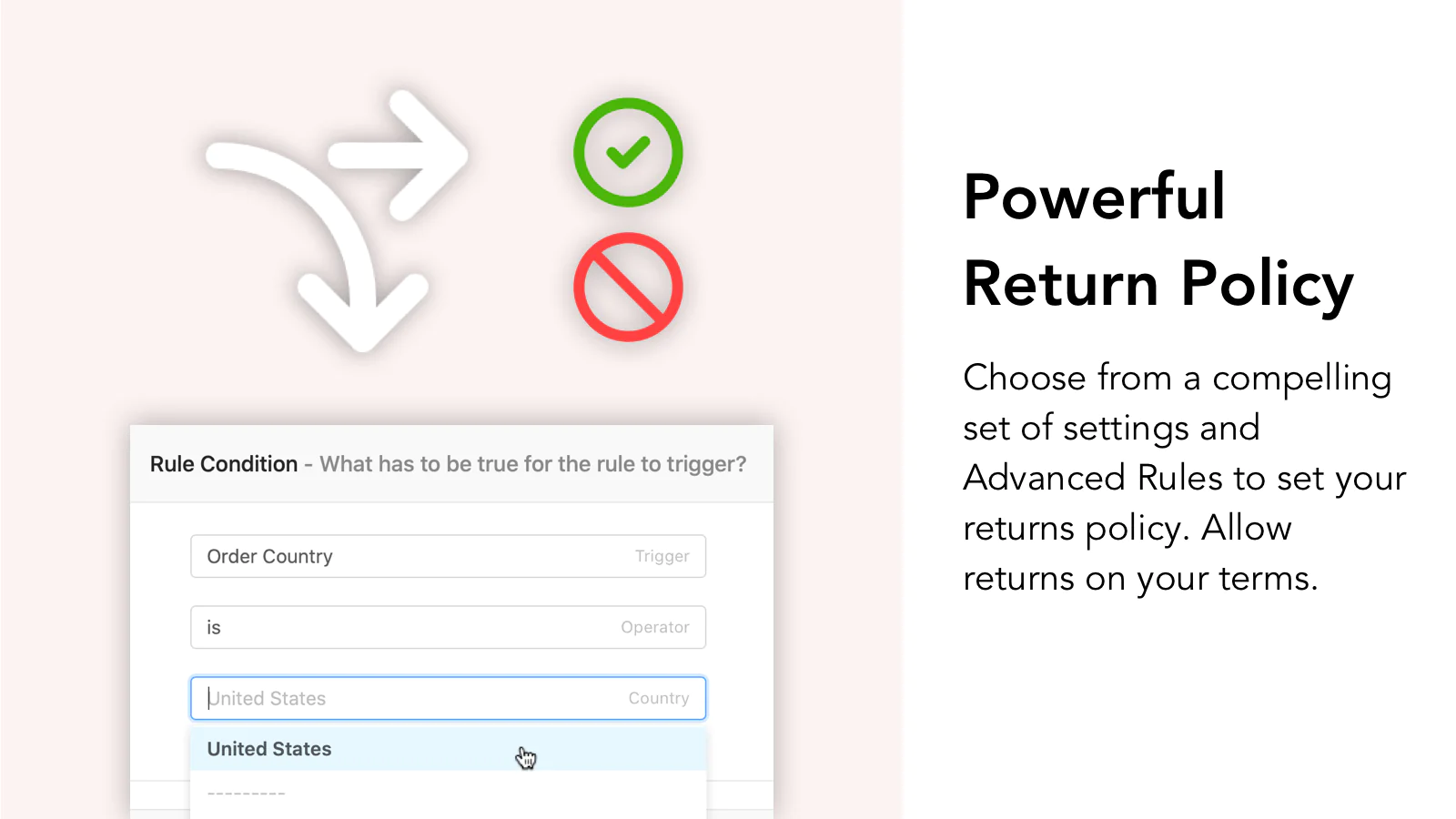
- Flexible Terms: Offer exchanges, store credit, and refunds on your own terms. You can even auto-approve returns.
- Keep your customers in the loop with automated email notifications
- Offer a return window based on the initial delivery date
- Allow customers to upload photos of product damage or issues for easy verification
- Set ineligible products that can't be returned
- Multi-Language support: great for international stores who need cross-border return capability (rücksendung and retoure)
Allow Exchanges for another product variant or an entirely different product
- Offer instant variant exchanges based on your live Shopify inventory
- Offer exchanges for all items within your Shopify collections based on smart rules
- App can automatically create exchange orders in your Shopify store directly to save time
Automate Prepaid Shipping Labels Using Our Return Shipping Label Tool
- Connect one of our supported Shipping Label Platforms that power 50+ carriers worldwide: USPS, UPS, FedEx, DHL, RoyalMail, Hermes, DPD, Australia Post, and many more!
- Build a great customer experience by offering return labels to ensure the return order process is as smooth as possible
- Generate return labels automatically using Rich Returns RMA solution or upload prepaid labels manually
Fully Customized Returns Portal
- Control the look and feel of your return center: add a logo, background, colors, and more
- Set a custom domain for your returns portal
Analytics & Business Intelligence
- Access detailed reports such as: What are the most common return reasons per variant in the last month?
- CSV Exports for off-line analysis
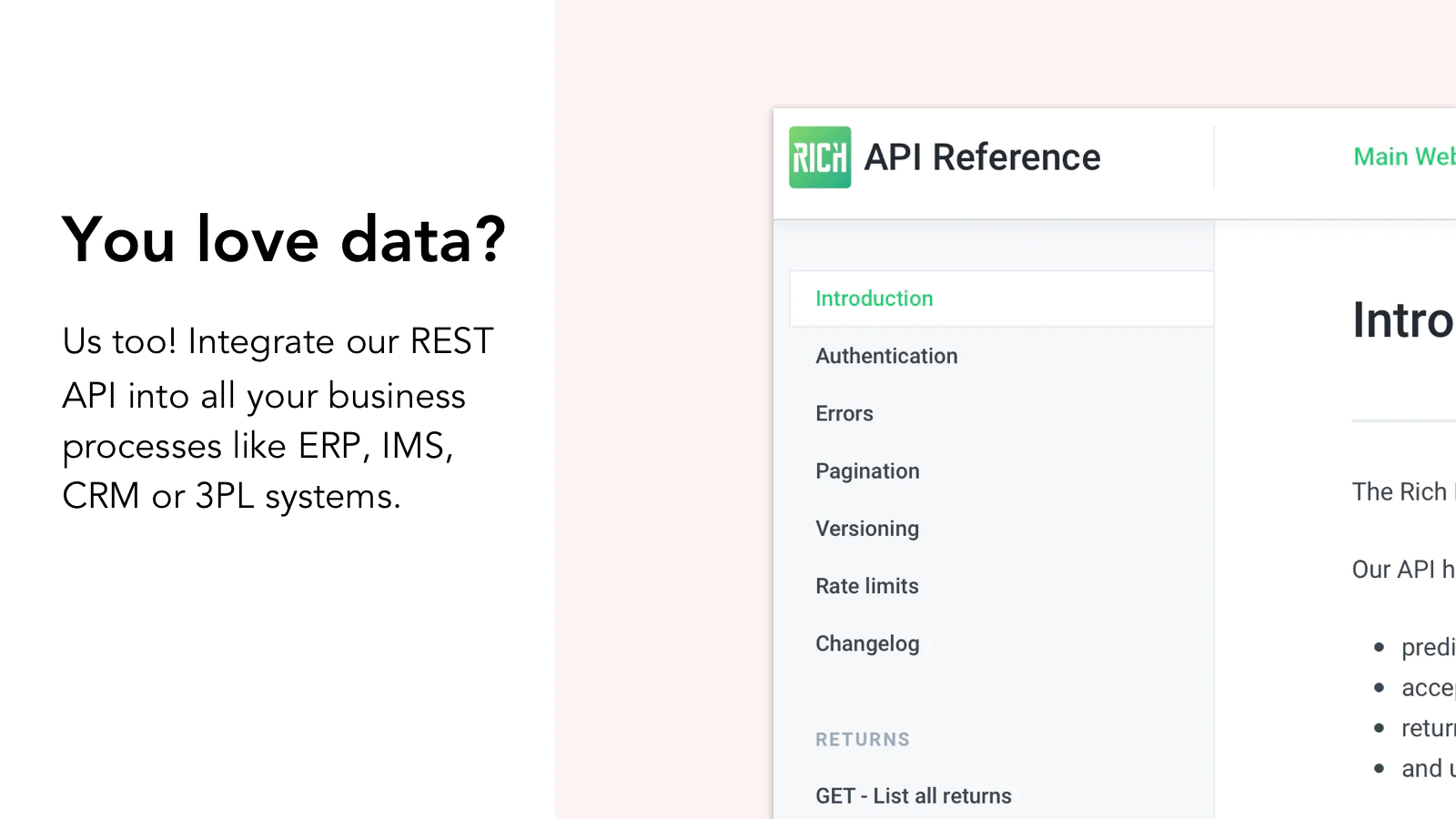
- Public REST API for deeper integration
We’re always here to help!
Once you install our app, our merchant support team will assist you along the entire setup process so you can get up and running quickly!

Speed tested: no impact to your online store
Learn How to Create a Transparent Refund Policy for Your Shopify Store
[2023/02/24 01:29:25]
You’re probably guilty of it yourself: only purchasing from an online store if their refund and return policy is clear and in your favour. And you’re not alone – returns are far more prolific among orders from ecommerce stores than among brick-and-mortar ones, three times more prolific. In this article, you’ll learn about refund policies as they pertain to your Shopify store. We’ll see why you need one, what to include, and what to remember when crafting one. We’ll also provide a refund policy template to help get you started on one for your store. What is a Refund Policy? A refund policy (or return policy) is a document that outlines the terms of refunds or returns for customers who have purchased products from your Shopify store. It’s a clear and exhaustive document containing information about when and under what circumstances customers are eligible for refunds. It is, in fact, a legally binding document in many locations.
How To Do An Exchange On Shopify (Updated for 2023)
[2023/02/10 12:42:46]
You may be a seasoned ecommerce player, or you’re just getting started on Shopify. In either case, you will eventually need to handle the exchange of a product through your online store. It could have been a customer who wants to swap out a product they purchased because it was not what they expected. Or a client changing their mind after purchase and wanting something different or better. In ecommerce, these occurrences are par for the course: we’ve seen before how between 20 and 30% of purchases are returned. Fortunately, there are tips and tools to help you manage, and sometimes even reduce, the volume of exchanges and returns you’ll encounter. In this article, we’ll look at the different types of exchanges you might offer, discuss the various methods of performing them on Shopify, and even look at how to do the refund and keep track of the exchanges you get. Let’s crack on.
How To Create A Returns Policy For Your Shopify Site
[2023/02/03 11:21:24]
Returns are an inevitable part of any eCommerce store’s activity, but a well-designed Shopify return policy can help you minimize their effects on the bottom line and keep customers happy. We’ve gathered the best tips for creating a returns policy that aligns with your business goals, contributes to positive customer experiences, and keeps you compliant with legal requirements. In this article, you will learn what a returns policy is, the importance of a customer-centric return policy, the key elements you should include, and tips for writing an effective return policy. What is a Returns Policy? A returns policy helps you establish the rules and conditions under which your customers can return or exchange products they have purchased from your online store. Your Shopify returns policy helps create an effective return process for unwanted or defective items.
12 Ways To Reduce the Cost of eCommerce Returns
[2023/01/20 04:04:32]
In ecommerce, products are returned often. Reported rates of return vary, but there’s good evidence that between 20 and 30% of online purchases are returned. Think about your last 10 online purchases – it’s not unreasonable to think that you returned 2 or 3 of them, right? Online retailers should offer a smooth purchase process and customer support that makes customers smile. In this post, we’ll discuss 12 ways to reduce the cost of your ecommerce returns and keep your store profitable. These include using technology, ensuring your products are photographed and described correctly, offering loyalty rewards, and outsourcing your returns management. Let’s take a look. Invest in Technology Investing in technology to help manage your product returns is a great way to reduce costs. Automated returns management software helps you track returns, generate RMA numbers, email your customer base about the status of their returns in real time, and more.
What is Returns Optimization? Optimize Shopify Returns With Rich Returns
[2023/01/13 08:34:59]
Optimizing Shopify Returns Shopify retailers tend to see high rates of returns—literally. The average rate of retail returns reached just over 16% in 2021, meaning that more than $761 billion of merchandise ended up back in stores and warehouses. Since the pandemic, consumers have been more likely to over-order items — and make more returns. Processing returned items can be time-consuming. Without the right reverse logistics solution, retailers may face high costs related to manually sorting items, sending refunds, and issuing replacements to be sent out. Returns can clog the supply chain and lead to unhappy customers. Fortunately, there are tools and strategies that can help companies better manage e-commerce returns. In this guide, we’ll show you how automating Shopify returns will make your operation run more efficiently and lead to higher customer retention.
Best Ways to Refund Shipping Costs on Shopify
[2022/12/23 04:16:07]
Effective returns and refund management is critical for keeping your customers happy, as well as for maintaining a steady revenue for your online store. Refunds occur naturally as part of the customer journey, and there are multiple reasons behind a refund request. Whenever you manage refund requests through your eCommerce platform, you can either issue partial refunds if the customer only wants to return some of the items, or full refunds for a customer that returns the entire order. But there are also other costs associated with the order, including shipping costs, shipping labels, and additional fees. In this article, you’ll learn the most common reasons behind a refund request, understand how important refund management is, and discover how to refund shipping costs and shipping labels on Shopify. Reasons Why Purchased Items Are Returned The return rates associated with online retail are four times higher than in physical stores.
Follow These Best Practices For Returns Management
[2022/12/23 04:07:05]
Returns are par for the course for an ecommerce business. Customers change their minds or the wrong size is shipped. In 2020, 1 in 12 purchased products was returned. But in small businesses, sales volumes are low and margins slim. A streamlined way of managing returns is helpful for you to maintain profitability. An ecommerce returns management system provides an integrated way to log, keep track of, and execute returns in an efficient way. In this post, we’ll understand what returns management is, the different types of returns, and the best practices for returns management. What is Returns Management? Returns management is the process of handling product returns. This can include everything from processing returns, to generating a return label for each return, to providing a free returns experience for customers. Shipping a returned product back from the customer is referred to as the reverse logistics process.
10 Best Payment Methods For Shopify
[2022/12/23 04:02:24]
The best payment methods for Shopify are the ones that allow your customers to choose their preferred payment method and help you ensure a good online shopping experience. They also enable you to build trust with your audience and existing customers. Thanks to the Shopify Payment gateway and the alternative third-party payment gateways, Shopify store owners have access to a secure, easy, and quick way to manage online payments. While Shopify Payments is the default payment gateway, it is only available and suitable for some eCommerce businesses. If you want to have the best payment methods set up for your Shopify store, you should look into third-party payment gateways that integrate with this eCommerce platform. In this guide, you’ll learn what Shopify Payments are, the benefits of using Shopify payment gateways, what factors to consider when looking for a solution, and our top 10 best Shopify payment methods recommendations.
How To Issue Refunds To A Different Card
[2022/12/23 03:55:29]
Can You Make A Refund To A Different Card? If you’ve ever scrolled through Yelp or Google Reviews, you’ll understand that it’s not possible to please every customer. There will always be negative product reviews. And that’s even more so the case for e-commerce businesses. However, that doesn’t mean you’re doomed to do nothing while you are bombarded by negative product reviews. There are many ways you can earn more positive reviews—one such way is by making the refund process on your Shopify store as smooth as possible. You can even go a step further and make a refund to a different card of the customer’s choice. Shopify does not offer a way for merchants to issue a refund to a different card than the customer used to make the original payment. But, here at Rich Commerce, we have a Shopify app that allows you to do just that. Here’s how we do it—and help you give your customers a better returns experience.
How to Use Reverse Logistics Software To Streamline Returns
[2022/12/23 03:46:17]
Returns are part and parcel of running an e-commerce brand (no pun intended). The average rate of retail returns reached just over 16% in 2021, meaning that more than $761 billion of merchandise ended up back in stores and warehouses. Product returns set off a series of events known as the reverse logistics process. eCommerce retailers see slightly higher average rates of returns, making it all the more important to have a reverse logistics solution in place. These solutions help you organize your reverse logistics operations, retain the maximum possible value from returned or unsold goods, and automate some of the manual parts of reverse logistics to help your business run smoothly. In this guide, we’ll cover the ins and outs of the reverse logistics supply chain and how to use reverse logistics software to minimize any negative impact that unsold goods could have on your business growth.
About the Author
Matej Kontros is an E-Commerce expert and app developer with over a decade of professional experience in IT.
Matej has worked for organisations of all types and sizes, including global players, startups, and agencies. He designed, developed, and maintained complex projects.
Matej's expertise includes e-commerce, software engineering, web development, systems administration, internet security, managing projects, and building teams.
Visit his website at [ Web Linkedin ] or contact him at [email protected].